How to Bounce Back After Losing a Deal
Share this post
How mentally fit are you? Find out in seven minutes.
Take the free quizKey points
- Beating yourself up after a lost deal feels productive, but the research points the other way.
- In a study of 86 participants who had just done badly on a difficult test, those who got a short self-compassionate message studied about five minutes for the next one, against about three minutes for those who got no message.
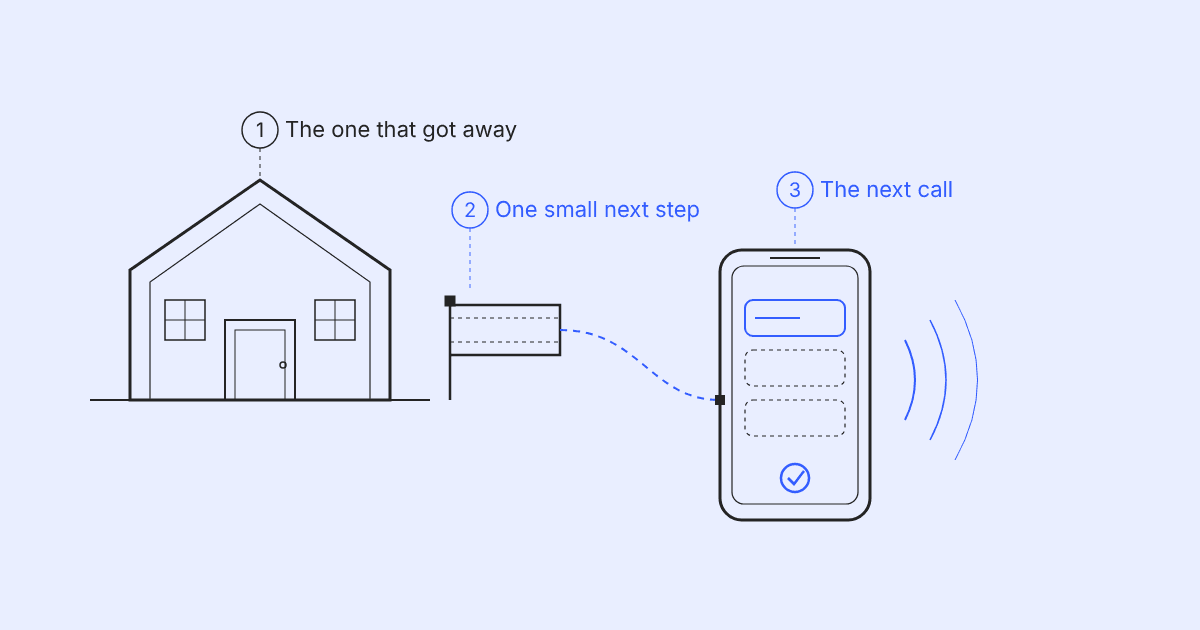
- Write one kind sentence, pick one thing to change, then rehearse your next call in detail before you make it.
The email takes four lines. The seller is going with someone else. They thank you for your time and wish you luck.
You read it twice. Then you start the replay. The price conversation, the moment you hesitated, the other agent who probably said whatever the seller wanted to hear. By dinner you are rewriting the whole pitch in your head, and by morning you are dreading the next call.
Why the replay feels useful
Going hard on yourself feels like accountability. If it stings enough, you will fix it. That is the quiet belief behind most post-mortems agents run on themselves at midnight.
Here is what is really going on. The replay can keep your attention on how the loss feels. The useful part, what you would do differently, gets little room. You end up tired, with a feeling and no plan.
What the research says
In a study led by Juliana Breines and Serena Chen, participants took a difficult 10-item vocabulary test from the GRE. On average they got 4 out of 10 right. Then they were told they would take a second test and could study for it as long as they liked.
Before studying, one group read a short note that included "If you had difficulty with the test you just took, you're not alone," and encouraged them not to be too hard on themselves. A second group got a self-esteem boost. A third got nothing. The self-compassion group studied for an average of about 306 seconds. The self-esteem group studied about 230 seconds, and the group with no message about 203 seconds.
Going easy on yourself got people back to work. One caveat: these were participants in a lab taking a vocabulary test, with no commission on the line. Still, it shows how people respond after a setback: the ones who were treated kindly spent more time on the next attempt. That is the spot you are in after a lost deal.
Three things to try
1. Write one kind sentence, then stop. Something like: "That one stung, and every agent loses listings." Write it the way you would say it to a colleague who just told you the same story. One sentence is enough. It is a signal to your mind that the replay can end.
2. Pick one thing to change. One, not five. If the price conversation went sideways, that is your one thing. Write down the first sentence you would say differently, and say it out loud once.
3. Rehearse the next call before you make it. Picture the first thirty seconds in detail. Your voice, the desk you are sitting at, the first line, the pause after it. Run it two or three times. If you have a listing presentation coming up, how to walk into a listing presentation calm and confident shows how to rehearse the room as well. Then pick up the phone while the picture is fresh.
You will lose more deals. What decides your year is how quickly you get back to the next conversation. Start with the kind sentence.

Research referenced
Frequently asked questions
How long does it take to get over losing a deal?
It varies from person to person, and there is no standard timeline. What you can control is what you do in the first hour: a short, honest debrief and a clear next step usually keep one lost deal from taking over the rest of the week.
Is being hard on myself after a lost deal a good way to improve?
A study in Personality and Social Psychology Bulletin found the opposite. After doing badly on a difficult test, participants who received a self-compassionate message spent more time studying for the next one than participants who received a self-esteem boost or no message.
How do I get back on the phone after a rejection?
Make the next step small and specific. Rehearse the first thirty seconds of your next call in detail, then make it. A small action you can finish rebuilds momentum faster than waiting to feel ready.